

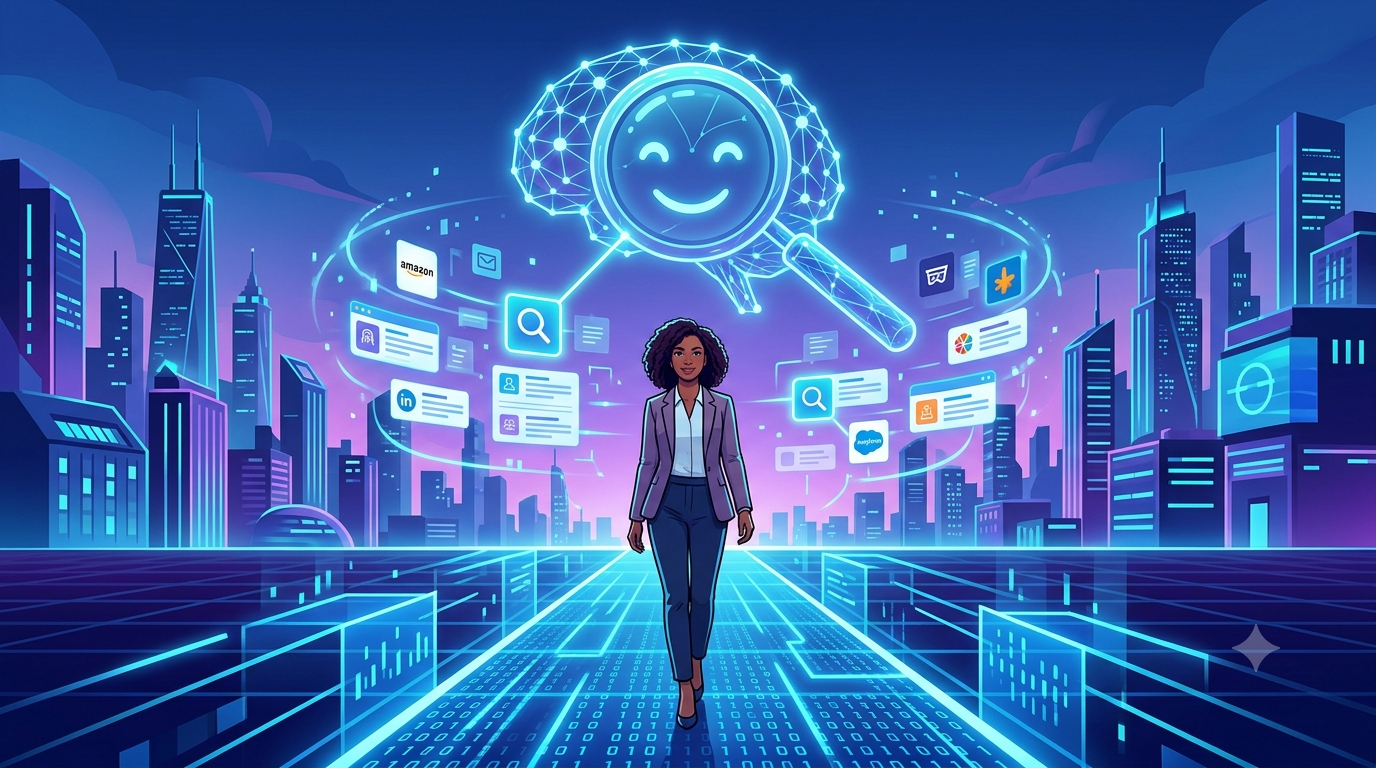
Artificial intelligence is changing how companies find, screen, interview, and hire employees. What once required hours of manual resume reviews and repetitive communication can now be supported by AI in recruitment, including AI-powered screening, candidate matching, and automated hiring workflows.
But what does this mean for job seekers?
Does AI make finding a job easier, or does it add another layer of technology candidates must learn to navigate?
The answer is more balanced than simply saying “yes” or “no.” AI can make the hiring process faster, more personalized, and more accessible for job seekers—but only when companies use it responsibly and keep human judgment involved.
From automated job matching and resume screening to interview scheduling and candidate communication, AI is becoming part of many stages of recruitment.
For candidates, understanding how these systems work can make it easier to prepare applications, improve visibility, and navigate modern hiring processes.
Key Takeaways
- AI can make job searching and recruitment faster.
- AI-powered tools can match candidates with relevant job opportunities.
- Automated screening may reduce repetitive recruitment tasks.
- AI can improve communication and interview scheduling.
- Candidates still need to demonstrate real skills and experience.
- AI can introduce concerns around bias, privacy, and transparency.
- Human recruiters remain important for evaluating culture, communication, and overall fit.
How Is AI Changing the Hiring Process?
Traditional recruitment can involve several manual steps.
A recruiter may need to review hundreds of resumes, compare candidate qualifications, schedule interviews, communicate with applicants, and update hiring records.
AI can support many of these activities.
Modern recruitment systems can analyze candidate information, identify relevant skills, organize applications, and help recruiters prioritize candidates. Integrated staffing platforms can also connect different stages of recruitment instead of keeping sourcing, screening, interviews, and onboarding in separate processes.
This does not necessarily mean AI replaces recruiters.
Instead, the goal is often to reduce repetitive work so recruiters can spend more time on conversations, candidate evaluation, and hiring decisions.
For job seekers, this can create a smoother experience when implemented properly.
1. AI Can Help Candidates Find More Relevant Jobs
One of the biggest advantages of AI in recruitment is better job matching.
Instead of relying only on job titles, AI systems can analyze information such as:
- Skills
- Work experience
- Education
- Certifications
- Previous roles
- Industry experience
- Job preferences
For example, imagine a software developer searching for a new position.
Their resume might say “backend developer,” while a company advertises a position as a “Java application engineer.”
A traditional keyword-based system may not always recognize the relationship between the two roles.
More advanced AI systems can analyze skills and context to identify potential matches.
This can help job seekers discover opportunities they may not have found through basic keyword searches.
2. AI Can Speed Up Resume Screening
Recruiters can receive hundreds of applications for a single position.
Reviewing every resume manually takes significant time.
AI-powered applicant tracking and screening tools can help organize applications according to predefined requirements. Some systems can identify relevant skills, experience, and qualifications and help recruiters prioritize candidates.
This can potentially reduce waiting times for candidates.
However, candidates should not assume that an AI system completely understands their experience.
A clear, well-structured resume remains important.
Use straightforward job titles, describe measurable achievements, and mention relevant technical and professional skills naturally.
Example
“Worked on different software projects.”
“Developed and maintained web applications using .NET and Azure, improving application performance and reducing manual processing.”
The second statement gives both humans and recruitment systems more useful information.
3. AI Can Improve Candidate Communication
One frustrating part of job searching is not knowing what happens after submitting an application.
Candidates may wait days or weeks without receiving an update.
AI-powered recruitment platforms can automate parts of candidate communication.
For example, candidates may receive:
- Application confirmations
- Interview reminders
- Scheduling options
- Status notifications
- Frequently asked questions
- Information about the next recruitment stage
This does not solve every communication problem, but automation can reduce unnecessary delays.
For job seekers, faster communication can make the overall recruitment experience less stressful.
4. Interview Scheduling Can Become Easier
Scheduling interviews can become surprisingly complicated when recruiters and candidates have different schedules.
AI-powered recruitment systems can help automate this process.
Instead of sending multiple emails such as:
“Are you available Tuesday at 2 PM?”
and
“No, can we do Wednesday?”
candidates may receive available time slots and select the option that works best.
This saves time for both sides.
Some recruitment platforms can also help coordinate virtual interviews and send automated reminders.
The result is a simpler process with fewer administrative steps.
5. Can AI Make Hiring More Fair?
This is one of the most important questions surrounding AI recruitment.
In theory, AI can help recruiters focus on skills and qualifications rather than making decisions based on irrelevant information.
For example, a well-designed system could evaluate candidates according to predefined job requirements.
But AI is not automatically unbiased.
AI systems learn from data, and historical hiring data can contain human biases.
If those biases are not identified and controlled, an AI system may reproduce or even amplify them.
Therefore, companies should not treat AI recommendations as final hiring decisions.
Human oversight is essential.
6. AI Can Improve the Candidate Experience—but There Are Limits
A good recruitment process should make candidates feel informed and respected.
AI can improve several parts of this experience.
For example:
Before applying: AI-powered job recommendations can help candidates identify relevant opportunities.
During application: Automated systems can simplify repetitive forms and application steps.
After applying: Automated notifications can keep candidates informed.
During interviews: Scheduling tools can reduce communication delays.
After interviews: Automated updates can help candidates understand what happens next.
However, candidates still want human interaction.
An automated chatbot may answer a basic question, but it cannot always replace a meaningful conversation with a recruiter.
That is why the best approach is usually AI + human expertise, rather than AI alone.
7. What Does AI Mean for Job Seekers?
Job seekers also need to adapt.
As recruitment becomes more technology-driven, candidates should understand how modern hiring systems evaluate applications.
Here are some practical steps.
Keep Your Resume Clear
Avoid unnecessarily complicated designs.
Use clear headings such as:
- Professional Summary
- Work Experience
- Skills
- Education
- Certifications
- Projects
Match Your Application to the Job
Read the job description carefully.
If the position requires Python, AWS, data analytics, or project management, make sure your relevant experience is clearly described if you genuinely have it.
Do not add skills simply because they appear in the job description.
Focus on Achievements
Recruiters need to understand what you actually accomplished.
Instead of listing responsibilities only, explain the results of your work.
For example:
is less informative than:
Keep Your LinkedIn Profile Updated
Recruiters increasingly use professional networks and digital platforms when sourcing candidates.
Your resume, LinkedIn profile, portfolio, and other professional information should tell a consistent story.
AI Recruitment Solutions and the Future of Hiring
For employers, ai agent development services can help automate repetitive processes, improve candidate matching, organize applicant information, and accelerate recruitment workflows.
Tri-Force provides staffing services including contract staffing, contract-to-hire, direct placement, and dedicated talent solutions, supporting organizations that need access to qualified technology professionals.
The important point is that AI should support recruitment—not remove the human element completely.
Recruiters still need to understand a candidate’s communication style, motivation, problem-solving ability, career goals, and potential fit within a team.
These factors can be difficult for an automated system to evaluate accurately.
AI in Recruitment vs. Traditional Recruitment
| Recruitment Area | Traditional Approach | AI-Supported Approach |
|---|---|---|
| Resume screening | Mostly manual | Automated assistance |
| Job matching | Keyword/search based | Skills and contextual matching |
| Interview scheduling | Emails and calls | Automated scheduling |
| Candidate updates | Manual communication | Automated notifications |
| Data analysis | Manual reports | Faster automated insights |
| Human interaction | High | Still essential |
| Decision-making | Human-led | AI-assisted + human oversight |
The goal should not be to remove recruiters.
The goal should be to allow recruiters to spend less time on repetitive administrative work and more time making thoughtful hiring decisions.
What Are the Risks of AI Hiring for Candidates?
AI-powered recruitment also creates several concerns.
1. Lack of Transparency
Candidates may not know why their application was rejected.
Companies should provide appropriate information about how automated systems are used.
2. Algorithmic Bias
Poorly designed systems can produce unfair outcomes.
Regular testing and human review are important.
3. Privacy
Recruitment systems process sensitive candidate information.
Companies need appropriate security and data-handling practices.
4. Over-Automation
Too much automation can make candidates feel like they are communicating with a machine rather than a company.
A good hiring process should combine technology with human interaction.
How Should Job Seekers Prepare for AI-Powered Hiring?
You do not need to become an AI expert to succeed in modern recruitment.
Instead, focus on making your professional information easy to understand.
- Step 1: Build a clear resume.
- Step 2: Highlight relevant skills and experience.
- Step 3: Customize your application for important roles.
- Step 4: Keep your professional profiles updated.
- Step 5: Prepare for both technical and behavioral interviews.
- Step 6: Be honest about your experience.
- Step 7: Research the company before the interview.
The most important thing is to remember that AI may help your application get noticed, but your actual skills, experience, communication, and ability to solve problems still matter.
Is AI Actually Making Hiring Better for Job Seekers?
In many situations, yes—but with an important qualification.
AI can make hiring faster and more convenient by improving job matching, automating administrative tasks, simplifying communication, and reducing delays.
But faster does not automatically mean better.
A high-quality recruitment process needs transparency, fairness, privacy, human oversight, and meaningful communication.
The future of recruitment is therefore unlikely to be completely human or completely automated.
Instead, it will increasingly combine AI technology with human expertise.
For job seekers, the best response is not to fear AI.
It is to understand how modern recruitment works and make sure your skills, experience, and professional value are clearly represented.
Final Thoughts
AI is changing recruitment, but it does not have to make the hiring process less human.
When used responsibly, AI in recruitment can reduce repetitive work, speed up communication, improve job matching, and create a smoother experience for both candidates and employers.
For job seekers, the key is preparation.
Keep your resume accurate, communicate your skills clearly, build a strong professional profile, and understand how modern recruitment technology works.
AI may help open the door—but your skills and experience are still what help you walk through it.
Frequently Asked Questions
1. How is AI helping job seekers find jobs?
AI can help job seekers discover relevant positions by analyzing skills, experience, job preferences, and other candidate information. It can also make application processes and interview scheduling faster.
2. Does AI decide who gets hired?
Not necessarily. AI can assist with resume screening, candidate matching, scheduling, and other recruitment tasks, but responsible hiring processes should include human review before important employment decisions are made.
3. Can AI improve the candidate experience?
Yes. AI can provide faster application confirmations, interview scheduling, reminders, status updates, and answers to common recruitment questions. However, candidates still benefit from direct communication with human recruiters.
4. Can AI recruitment systems be biased?
Yes. AI systems can reflect biases present in their training data or design. Organizations should test recruitment systems regularly and maintain appropriate human oversight to identify and reduce potential bias.
5. How can I make my resume better for AI recruitment systems?
Use a simple structure, clear section headings, relevant job titles, and accurate descriptions of your skills and experience. Include relevant keywords naturally when they genuinely describe your qualifications.
6. Will AI replace recruiters?
AI is more likely to change the role of recruiters than completely replace them. Recruiters can use AI to handle repetitive tasks while focusing more on candidate relationships, interviews, evaluation, and hiring decisions.
7. Should job seekers use AI when applying for jobs?
AI tools can help with tasks such as researching roles, improving clarity, preparing interview questions, or identifying gaps in a resume. However, candidates should ensure that applications remain truthful and accurately represent their own skills and experience.
8. What is the future of AI in recruitment?
The future will likely involve greater use of AI for candidate matching, screening, scheduling, recruitment analytics, and workflow automation. Human judgment will remain important for fairness, relationship building, and final hiring decisions.